 Official website
Blog
Nerve Supplement vs Medicine: What Is the Legal Difference?
A nerve supplement is a food-type product, while a nerve medicine is a drug the FDA must approve first. Nervecept is a dietary supplement in 30-capsule bottles, so the FDA did not approve it or evaluate its claims. Its label says one capsule a day and carries the standard disclaimer.
Written by the Nervecept label deskUpdated · 4 min read
What is the difference between a nerve supplement and a medicine?
A medicine is approved for a disease. A supplement is not.
Under U.S. law, the FDA has no power to approve dietary supplements before they are sold (FDA, Q&A on Dietary Supplements). The company must make sure the product is safe and the label is truthful, and the FDA acts after a product is on the market (FDA, Dietary Supplements).
| Question | Dietary supplement | Medicine |
|---|---|---|
| FDA approval before sale | No | Yes |
| May claim to treat a disease | No | Yes, if approved for it |
| Proof of benefit | Not required | Required |
| Label disclaimer | "Not evaluated by the FDA" | Not needed |
Does the Nervecept label say it is a medicine?
No. The label calls it a "Dietary Supplement" and adds that it is not intended to diagnose, treat, cure or prevent any disease.
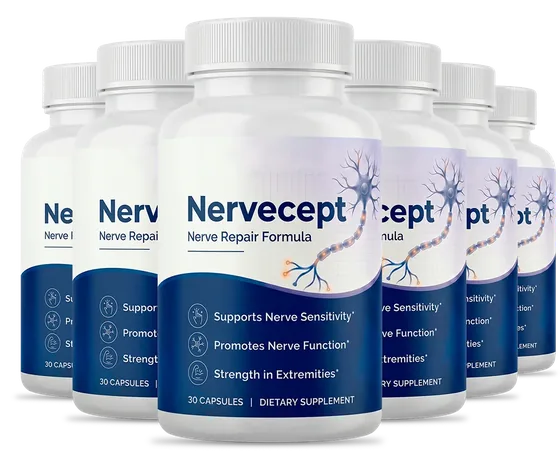
The front says "Nerve Repair Formula" with three starred lines. The star leads to the FDA statement. Supplement labels cannot claim to treat a disease, and structure and function claims must carry that disclaimer (NCCIH, Using Supplements Wisely).
So read the name as a brand word, not a medical finding. No source linked on this site shows the eight lines repair nerves. See the Supplement Facts for every amount.
When does a nerve problem need medicine instead of a supplement?
A nerve problem needs a doctor when it is new, spreading or getting worse.
Numbness and tingling have many causes, including diabetes and low vitamin B12 (NINDS, Peripheral Neuropathy) (NIH ODS, Vitamin B12). A supplement does not replace the exam or a prescription. Keep taking any prescribed medicine exactly as directed.
- Tingling, weakness or pain that is newTell a doctor early: treating the cause sooner gives nerves the best chance.
- Symptoms that spread or keep returningMoving up the legs or arms, or showing up on both sides, deserves a visit.
- Trouble walking, balance or dropping thingsThese are reasons not to wait.
- A foot sore or blister you did not feelWith diabetes, a sore you cannot feel can become an ulcer fast.
- Sudden weakness, face droop or trouble speakingCall 911 now; this can be a stroke, not a nerve problem.
Signs from MedlinePlus (MedlinePlus, Peripheral Neuropathy), Mayo Clinic (Mayo Clinic, Peripheral Neuropathy) and Cleveland Clinic (Cleveland Clinic, Peripheral Neuropathy). People with diabetes: CDC foot-care steps (CDC, Your Feet and Diabetes).
Supplements can also interact with drugs. NCCIH says to tell every provider what you take (NCCIH, Using Supplements Wisely).
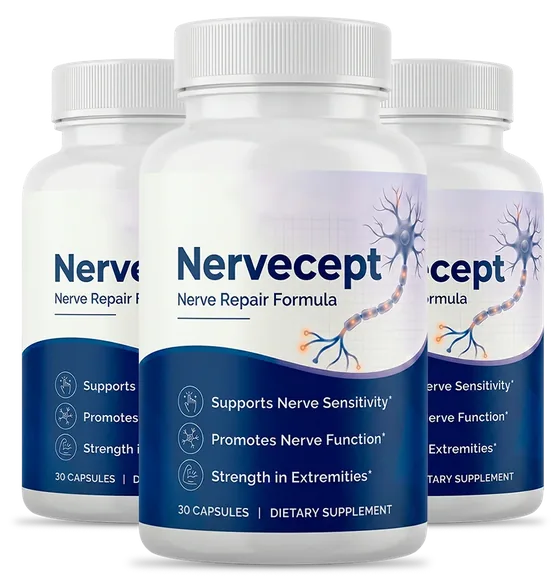
Nervecept: from $49 a bottle30 capsules · 2, 3 or 6 bottles · free US shipping on 3 and 6 · 60-day money-back guarantee
See packsIs Nervecept worth trying next to your doctor's plan?
It is a personal choice, and only after your doctor or pharmacist agrees it is safe for you.
The capsule contains shellfish (crayfish) and no trial has tested it. If you still want it, a 3-bottle pack is $207 and a 6-bottle pack is $294, with a 60-day money-back guarantee on the sales page (Nervecept sales page). Confirm the terms at checkout.
90-day supply
3 bottles: 90 days
$207$69 a bottle · about $2.30 a day
Free US shipping · 60-day money back
Order 3 bottlesLowest per bottle
6 bottles: 180 days
$294$49 a bottle · about $1.63 a day
Free US shipping · 60-day money back
Order 6 bottlesPrices on the Nervecept sales page, October 19, 2026 (Nervecept sales page). Two bottles are also sold for $158. Check your medicines and the shellfish line with your doctor before you order.
FAQ01
Nervecept questions people ask
Is a nerve supplement a drug?
No. A dietary supplement is regulated separately from drugs, and the FDA does not approve it before sale. A drug must show it works for a disease first. Nervecept's label states it is not intended to diagnose, treat, cure or prevent any disease.
Can a supplement replace nerve medication?
No. Keep taking prescribed medicine and never stop it because of a supplement. NCCIH advises against replacing medical diabetes care with an unproven product. Talk to your doctor before adding any capsule to your routine.
Who checks that a nerve supplement is safe?
The company is responsible first, and the FDA acts mainly after sale. Manufacturers must follow good manufacturing practices, but that is not a product test. Third-party marks like USP exist, and we found none printed on this label.
Where do I report a bad reaction to a supplement?
Tell your doctor first, then report it to the FDA through MedWatch. Stop the product if you notice warning signs such as dark urine, yellow skin or severe stomach upset, and seek medical care.
Who wrote this02
Written and reviewed by
Pages built from the label, the sales page and linked NIH, FDA, CDC, FTC and peer-reviewed sources.
Last updated . See our editorial standards and how we check reviews. This website is run by a licensed U.S. retail desk for Nervecept, not by the manufacturer or the distributor. We are paid a commission when you buy through our order links.
Keep reading
More about Nervecept
Licensed U.S. retail desk for Nervecept
Ready to try Nervecept?
Check your medicines and the shellfish line first, then pick a pack. Six bottles cost the least per bottle; three and six ship free in the US; every pack carries the 60-day money-back guarantee.
- Secure checkout on the sales page
- 60-day money-back guarantee
- Ships from the U.S.