 Official website
Ingredient profile 1 of 8
Glucosamine Sulfate and Nerves: What 500 mg in a Nervecept Capsule Does and Does Not Mean
Glucosamine sulfate is an amino sugar and the largest line in Nervecept: 500 mg of the 699 mg in each capsule, or 71.5 percent. The research on it is mostly about knee osteoarthritis, and the results are mixed. We found no source showing glucosamine sulfate helps nerves, and the capsule contains shellfish (crayfish).
Written by the Nervecept label deskUpdated
The basics01
What is glucosamine sulfate in Nervecept?
Glucosamine sulfate is an amino sugar, and it is the first and largest line on the Nervecept label. Each capsule lists 500 mg of it.
That is 71.5 percent of the 699 mg the label adds up. The other seven lines share the remaining 199 mg.
Glucosamine is usually made from the shells of shellfish. The label says "Contains: Shellfish (Crayfish)", so the capsule carries a real allergy flag. We did not find the source of this glucosamine on the bottle, only the allergen line.
The front of the bottle says "Nerve Repair Formula". Glucosamine is a joint-type compound, so the name and the main ingredient do not line up. The next sections trace that gap.
| Name on the label | Glucosamine Sulfate |
|---|---|
| What it is | Amino sugar, usually made from shellfish shells |
| Place on the label | 1 of 8, most to least by weight |
| Amount per capsule | 500 mg per capsule (71.5% of the 699 mg listed) |
| Amount used in research | No verified dose source found |
| Strength of evidence | Knee osteoarthritis: mixed; not studied for nerves |
| Marketed or traditional use | Sold for joint comfort |
| Main caution | May raise blood sugar in some people; shellfish allergy; raises bleeding risk with warfarin. |
Nerve question02
Does glucosamine sulfate help nerves or nerve pain?
No source we found shows that glucosamine sulfate helps nerves or nerve pain. The research we could read is about joints.
Mayo Clinic says oral glucosamine sulfate might help some people with knee osteoarthritis, and that other joints need more study (Mayo Clinic, Glucosamine). It does not mention nerves.
The NIH center for complementary health describes a large two-year U.S. study of 572 people. Joint space did not differ between placebo and the glucosamine groups (NCCIH, Glucosamine and Chondroitin). That study tested glucosamine hydrochloride, not the sulfate form, so it is a hint and not a direct answer.
Tingling and numbness have causes such as diabetes and low vitamin B12, and a doctor should look for them first (NINDS, Peripheral Neuropathy) (NIH ODS, Vitamin B12). A joint compound does not answer that question.
Label line to knee studies is a real path. Knee studies to nerve repair is not. No link between the two was found in the sources on this site.
Evidence03
What does the research on glucosamine actually show?
The research on glucosamine is mixed, and it is mostly about knee osteoarthritis.
Memorial Sloan Kettering reports that many knee and hip trials found no benefit. It adds that the American College of Rheumatology conditionally recommends that patients avoid glucosamine for osteoarthritis (MSK, Glucosamine). Mayo is kinder to the sulfate form, with limits (Mayo Clinic, Glucosamine).
| Source | What it says | About nerves? |
|---|---|---|
| NCCIH (NCCIH, Glucosamine and Chondroitin) | A 2-year study of 572 people showed no joint space difference from placebo; large studies found no major safety problems | Not discussed |
| Mayo Clinic (Mayo Clinic, Glucosamine) | Glucosamine sulfate might help some people with knee osteoarthritis; more study needed for other joints | Not discussed |
| Memorial Sloan Kettering (MSK, Glucosamine) | Evidence mixed; many knee and hip trials found no benefit; no dose listed | Not discussed |

Amount04
Is 500 mg of glucosamine sulfate a studied dose?
We cannot say. We found no verified dose source for glucosamine sulfate, so no studied amount sits next to the 500 mg.
The NCCIH, Mayo and Memorial Sloan Kettering pages we read list no dose (NCCIH, Glucosamine and Chondroitin) (Mayo Clinic, Glucosamine) (MSK, Glucosamine). We will not borrow a number from a store shelf or a forum. If you want to compare, ask your doctor or pharmacist what amounts the trials you care about used.
What we can do is show the share. One capsule is drawn to scale below. Glucosamine takes most of the bar.
699 mgin one capsule, eight label lines, drawn to scale
- Glucosamine sulfate500 mg71.5%
- Indian frankincense67 mg9.6%
- Chondroitin sulfate50 mg7.2%
- Turmeric50 mg7.2%
- Quercetin8 mg1.1%
- Methionine8 mg1.1%
- MSM8 mg1.1%
- Bromelain8 mg1.1%
A worked example: 500 divided by 699 is 0.715, or 71.5 percent. At one capsule a day, a 30-capsule bottle holds 15,000 mg of glucosamine sulfate, and that is the label amount times 30. It is arithmetic, not a studied amount.
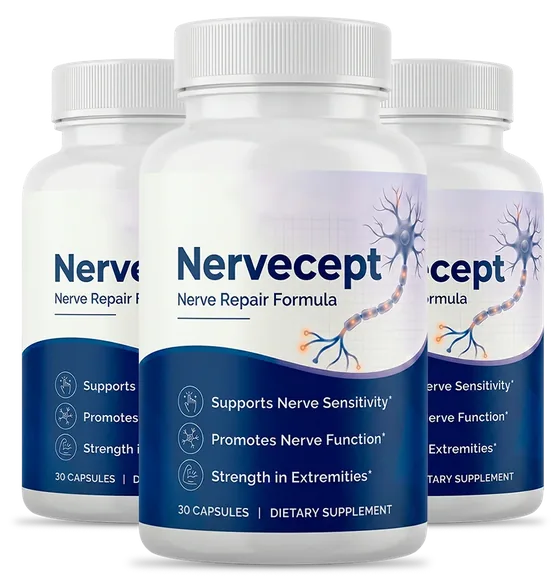
Nervecept: from $49 a bottle30 capsules · 2, 3 or 6 bottles · free US shipping on 3 and 6 · 60-day money-back guarantee
See packsSafety05
Is glucosamine sulfate safe, and who should be careful?
Glucosamine has no major safety problems in large studies, but it has four flags that matter for some people (NCCIH, Glucosamine and Chondroitin).
Shellfish allergy
Glucosamine may come from shellfish shells, and the concern is an allergic reaction (Mayo Clinic, Glucosamine). This capsule is labeled as containing crayfish. Never assume it is shellfish-free.
Warfarin and blood thinners
Glucosamine, alone or with chondroitin, may raise warfarin's effect and bleeding risk (NCCIH, Glucosamine and Chondroitin) (Mayo Clinic, Glucosamine). Tell your pharmacist before you start.
Diabetes
Glucosamine may raise blood glucose in some people (NCCIH, Glucosamine and Chondroitin). If you track your sugar, tell your care team.
Glaucoma and kidney or liver history
People with glaucoma should ask a doctor first (Mayo Clinic, Glucosamine). Memorial Sloan Kettering lists case reports of kidney and liver problems (MSK, Glucosamine).
Common side effects in Mayo's summary are nausea, heartburn, diarrhea and constipation (Mayo Clinic, Glucosamine). The label also tells pregnant or nursing mothers, anyone under 18 and anyone with a medical condition to ask a physician first.
Keep taking prescribed medicine. Never stop or change it for a supplement. New, spreading or worsening numbness, weakness or balance trouble, or a foot sore you cannot feel, needs a doctor.
In the capsule06
How does glucosamine fit with the other seven lines?
Glucosamine sits with chondroitin sulfate and MSM in the cartilage-type group on the label, and it outweighs both put together by a wide margin.
Chondroitin is 50 mg and MSM is 8 mg, so the three joint-style lines total 558 mg of the 699. Read the chondroitin sulfate profile to see the pair studied together in knees.
The plant lines are far smaller: Indian frankincense at 67 mg and turmeric at 50 mg. See Indian frankincense and turmeric. The full list is on the supplement facts page.
How to read the glucosamine line
- Look for the 500 mg figure on the Supplement Facts panel, then the allergen line under it.
- Remember that one capsule a day is the label direction. Do not exceed it.
- Treat knee research as knee research. It does not carry over to nerves by default.
Before you order07
Should you buy Nervecept for its glucosamine?
Buy it for glucosamine only if you accept three limits: the research is about knees, the dose is unverified, and the capsule contains shellfish.
A bottle is 30 capsules, which is 30 days. The sales page lists 2 bottles at $158, 3 at $207 and 6 at $294, with a 60-day money-back guarantee to confirm at checkout (Nervecept sales page).
If you want a plain glucosamine product and nothing else, this is a mixed formula with seven other lines. If you want a nerve treatment, no supplement we found does that, and a doctor is the right first stop.
Nervecept: from $49 a bottle30 capsules · 2, 3 or 6 bottles · free US shipping on 3 and 6 · 60-day money-back guarantee
See packsFAQ08
Glucosamine sulfate questions
Is glucosamine sulfate good for nerve pain?
No source we found says so. Glucosamine sulfate has been studied mostly for knee osteoarthritis, with mixed results. Nerve pain has many causes that a doctor should check, such as diabetes or low vitamin B12, and a joint supplement does not replace that check.
How much glucosamine sulfate is in Nervecept?
Each Nervecept capsule lists 500 mg of glucosamine sulfate, which is 71.5 percent of the 699 mg total. A 30-capsule bottle at one capsule a day holds 15,000 mg. We found no verified dose source to compare the 500 mg against.
Does Nervecept glucosamine come from shellfish?
Glucosamine is usually made from shellfish shells, and the Nervecept label says it contains shellfish (crayfish). We did not find the exact source named on the bottle. Treat the capsule as unsafe for a shellfish allergy unless your doctor says otherwise.
Can glucosamine raise blood sugar?
It may in some people. NCCIH notes that glucosamine may increase blood glucose. If you have diabetes, tell your doctor or pharmacist before taking Nervecept, keep checking your sugar as directed, and never change a prescribed medicine because of a supplement.
Does glucosamine interact with warfarin?
Yes, it may. NCCIH and Mayo Clinic both say glucosamine, alone or with chondroitin, can raise warfarin's effect and bleeding risk. Turmeric and frankincense in the capsule carry similar notes. Tell your pharmacist before starting if you take any blood thinner.
What are the side effects of glucosamine sulfate?
Mayo Clinic lists nausea, heartburn, diarrhea and constipation as common. Large studies found no major safety problems. People with glaucoma should ask a doctor first. Stop and call a doctor if you get hives, swelling or trouble breathing.
Does glucosamine sulfate really work for knees?
Not clearly. Mayo says the sulfate form might help some people with knee osteoarthritis, while Memorial Sloan Kettering says many knee and hip trials found no benefit. The honest word is mixed. Either way, this is knee research, not nerve research.
Who wrote this09
Written and reviewed by
Pages built from the label, the sales page and linked NIH, FDA, CDC, FTC and peer-reviewed sources.
Last updated . See our editorial standards and how we check reviews. This website is run by a licensed U.S. retail desk for Nervecept, not by the manufacturer or the distributor. We are paid a commission when you buy through our order links.
Keep reading
More about Nervecept
Licensed U.S. retail desk for Nervecept
Ready to try Nervecept?
Check your medicines and the shellfish line first, then pick a pack. Six bottles cost the least per bottle; three and six ship free in the US; every pack carries the 60-day money-back guarantee.
- Secure checkout on the sales page
- 60-day money-back guarantee
- Ships from the U.S.